M2 Wk3: Strategies of Sharing

Activity: Making Zines


In keeping with many aspects of this module, school work and commitments have kept me from committing to this activity in the appropriate timeframe (or manner).  In the case of making zines, this precludes my ability to collaborate with colleagues or come close to meeting the deadline.  Necessity dictates that some of my coursework will have to follow, and hopefully, enhance the work that I have to produce in-school. Pleasingly, not all of my work is unrelated.

For a school trip to South Africa, it seemed appropriate to produced a guide book for the pupils. The design brief is to help limit the countless questions inevitably raised by the children prior to and during the trip.  An important part of the conceptual work is collaboration with those travelling: what are they unsure about?  What concerns might they have?  What information would it be helpful for them to know?  Consequently, they provided the questions that fuelled the majority of the content.

To that end, the zine takes the form of a guide book to support a school trip to South Africa in mid July.

Hard copies have already been produced in-house through Reprographics, using high quality 100gsm paper stock.  These have been distributed to the children, with plenty spares or the trip itself.

A flipbook version is linked below:

SA2018 - KZN (low res)

Project Development

Reverting back…


Work commitments in the summer months have not be kind to me where time for project development is concerned and more often than not, I have not even had the opportunity to hold my trusty Canon EOS-1D X Mark II when in situations that lend themselves to photography.  However, for the most part, on such occasions I would have the Canon G3X and iPhone X to allow some worthwhile photography and experimentation.

Quite often I have enjoyed wildlife photography in Africa.  A recent school trip to South Africa provided me the occasional chance to revert back to such work and witness the natural world – usually only if I was up and about some hours before the children.  Wildlife photography in South Africa requires the consideration that you are no more than part of the food chain.  Despite the knowledge that this Nile crocodile (Crocodylus niloticus) had recently eaten, distance was always kept.SA - Nile Crocodile submerged (low res)


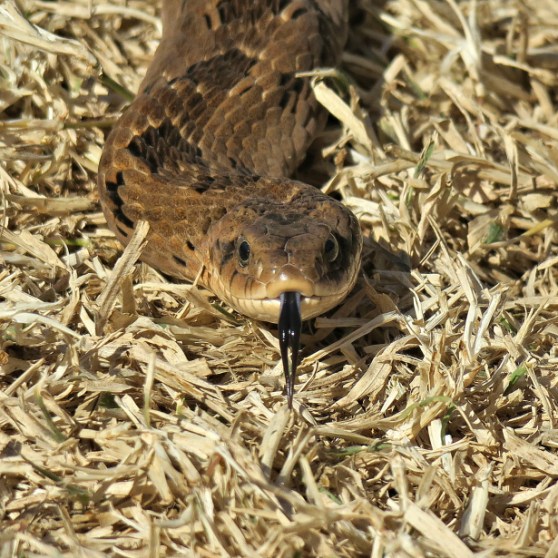
South Africa’s smaller reptiles are certainly no less dangerous.  The following two images are not tame exhibits:  I was told under no circumstances to lie prone on the ground to capture the photographs I would have liked to have taken, as I would stand no chance of getting away from an attack.  With the venomous puff adder (Bitis arietans) accounting for more deaths than any other snake in Africa, I heeded the warning.SA - Puff Adder (low res)

A bite from the night adder (Causus rhombeatus), though also venomous, is unlikely to fatal to adult humans – notwithstanding, I remained at a safe distance.SA - Night Adder (low res)


The striped kingfisher (Halcyon chelicuti) is not easy to catch on film – particularly during breakfast.  Unlike the variants found in the UK, these eats mostly grasshoppers followed by other large insects. Small lizards, snakes and rodents are also occasionally taken.  This juvenile spent a few precious moments perched 10m away from me, before continuing with its hunting.  On this occasion, I was seen as the potential threat.SA - Striped Kingfisher chick (low res)